

Olusegun ‘Pelumi OLUKOGA
While the digital media has revolutionized communication, public information sharing and public participation, it has also given rise to serious ethical, legal and privacy issues. The paper explores the ethical responsibilities of truthfulness and transparency, legal principles of copyright and data protection, as well as privacy and security issues such as misuse of personal data and cybersecurity threats. It also considers encryption and privacy enhancing technologies as ways to safeguard digital information. COVID-19 misinformation and the Facebook–Cambridge Analytica case both serve as examples of the risks posed by misleading content and poor data governance, while four decisions by the Court of Justice of the European Union (CJEU) provide clear examples of copyright and data protection rules in the context of online linking, embedding and search-engine delisting. The analysis points out that a responsible digital media is more than a mere legal compliance or technical protection. Transparency, respect for individual rights and the implementation of proper security controls and clear organizational accountability are essential to effective protection. A policy brief then suggests steps that policymakers, industry leaders and consumers must take to better ensure information integrity, better data protection, and safer digital participation.
Keywords: Copyright; Cybersecurity; Data protection; Misinformation; Transparency
1. Introduction
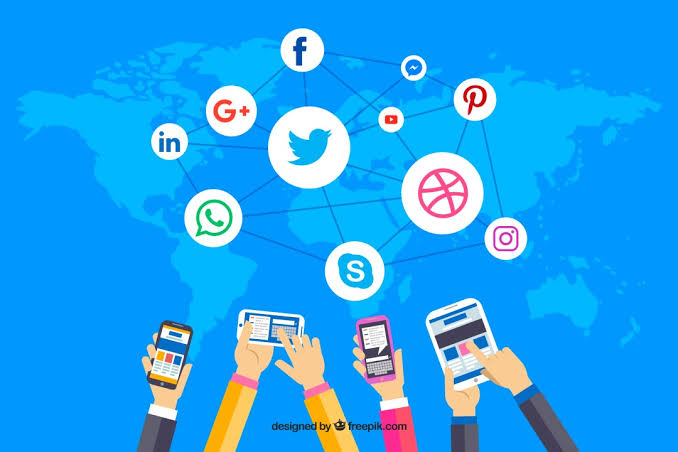
Digital media such as websites, social networking, online video and digital advertising are a central feature of communication, education, commerce and public life today. While its ability to disseminate information rapidly and to a wide audience may have significant advantages, it also generates concerns of accuracy, transparency, ownership, and usage and security of personal data. These risks span across borders, and are interrelated: misleading content can undermine trust in society; unclear data practices can stifle informed consent; and lack of safeguards can leave people vulnerable to misuse and cyberattacks. In this paper, ethical issues (truthfulness and transparency), legal issues (copyright and data protection) and privacy and security issues (misuse of personal data and cybersecurity threats) are analyzed. It also examines encryption and privacy-enhancing technologies, and considers real-life implications of COVID-19 misinformation, the Facebook–Cambridge Analytica case and relevant judicial decisions. A policy brief is offered at the end of the discussion outlining the actions that should be taken by policy makers, industry leaders and consumers to help foster more trustworthy, lawful and secure practices surrounding digital media.
2. Literature Review
Ethical issues such as truthfulness and transparency are also pivotal in digital media, as false information may erode the public’s trust and confidence in decision-making. The World Health Organization (2020) defines an infodemic as an overabundance of or too much information, including inaccuracies and misinformation. A systematic review of 22 studies by Gabarron et al. (2021) showed that the share of social media posts containing COVID-19 misinformation ranged from 0.2% to 28.8%. However, only four studies assessed its consequences, which suggests that there is existing evidence that is limited in scope in assessing its impact. The Facebook–Cambridge Analytica case is another example of this insufficient transparency and accountability in the handling of data, which can damage public trust (Information Commissioner’s Office, 2018). Legal proceedings that followed, including a $725 million settlement in 2022, showed the repercussions of the alleged failure to ensure users’ information is protected. The EU Digital Services Act introduces more stringent transparency requirements for digital platforms, including with regard to content moderation and online advertising. The related legal challenges include copyright and data protection (Pieter & Frederik, 2025). In Svensson v Retriever Sverige AB (2014), the Court of Justice of the European Union (CJEU) has clarified the situations under which linking to freely accessible copyrighted material does not constitute communication to a new public (Mezei, 2016). In VG Bild-Kunst v Stiftung Preußischer Kulturbesitz (2021), the Court found that framing content in a manner that infringes on effective protective measures might necessitate authorization. Likewise, Google Spain v AEPD (Frantziou, 2014) and TU and RE v Google LLC (Ulgen, 2023) have defined the obligations of search engines with regard to personal data and the removal of certain search results (Ulgen, 2023). Technical protection is also required for privacy protection. The findings from the UK Cyber Security Breaches Survey (Department for Science, Innovation and Technology, 2025) offer insights into the cyber risks that organizations face, whereas ICO guidance addresses encryption and privacy-enhancing technologies (PETs) as security measures for personal data. This paper therefore looks at the convergence of the principles of truthfulness, transparency, copyright, data protection and cyber security, and the role of encryption and PETs in mitigating digital risks.
3. Problem Statement and Presentation of the Information
3.1 Problem statement
Digital media presents an interconnected ethical, legal and privacy issues. The consequence of misinformation is loss of public trust, opaque data use practices affect informed consent, copyright norms have questions regarding the use of online material, and the lack of cybersecurity leaves personal data vulnerable. The core questions are whether the current legal and technical protections are sufficient to mitigate the risks and how actors can improve accountability, secure the protection of users and foster responsible digital media practices.
3.2 Part A: Ethical considerations
Truthfulness. Digital content creators and platforms have a duty to ensure that they do not disseminate false or misleading information and can help their audiences make an informed choice. As the COVID-19 pandemic unfolded, misinformation highlighted negative consequences of inaccurate online information to the public health. According to the World Health Organization (2020) an infodemic can cause confusion, promote bad behavior, erode trust in health authorities and impair public health efforts. Reported COVID-19 misinformation spanned from 0.2% to 28.8% of posts across 22 studies, and the differences in percentages were due to the platform(s) and methodology analyzed (Gabarron et al., 2021). Additionally, across the markets surveyed, 58% of the respondents were worried about knowing how to distinguish between real and fake news online (Newman et al., 2025). The study points to the need for fact checking, responsible content moderation and digital literacy to curb misinformation.
Transparency. Transparency means that platforms need to be transparent about personal data collection and use, and about the selection and targeting of online content and advertisements. The Facebook–Cambridge Analytica episode is a prime example of the repercussions of poor transparency. The United Kingdom’s Information Commissioner’s Office (ICO, 2018) reported that an application accessed information about millions of Facebook users and that this information was then used by Cambridge Analytica during the 2016 US presidential campaign for political profiling and for voter targeting. Users were not sufficiently informed about these uses, and there were serious concerns regarding informed consent and the lawful processing of personal data. The ICO, however, recognized that it was not possible to quantify the impact of such activity on the individual’s voting decision. The case thus offers a greater degree of evidence of failures in transparency and data protection than of an actual impact on the electoral outcomes.
These concerns are still relevant with regards to digital governance. The European Union Digital Services Act obligates advertising platforms to disclose specific details regarding advertisements, such as the advertiser, and the main parameters employed for the targeting of these ads, and to explain the main parameters of the recommender systems (European Union, 2022, Arts. 26–27). Truthfulness and transparency are thus complementary ethical principles: truthfulness facilitates reliable information; transparency allows the users to know how information and personal data influence their online presence.
3.3 Part B: Legal frameworks and regulations
Copyright. Copyright covers the rights of creators in relation to the reproduction and distribution of their work online. The author is typically the first copyright owner under the UK Copyright, Designs and Patents Act 1988 (CDPA), except where a copyright owner is normally the employer of an employee who creates a qualifying work in the course of his or her employment (s. 11). Copying comprises electronic reproduction (s. 17), while s. 20 relates to communication to the public, which includes putting works online for public consumption on demand. The unauthorized upload or reproduction could therefore constitute an infringement of copyright.
The Court of Justice of the European Union (CJEU) in Svensson v Retriever Sverige AB (C-466/12) ruled that hyperlinks to works that are freely available to anyone with the copyright owner’s consent did not constitute communication to a new public. Yet, in VG Bild-Kunst v Stiftung Preußischer Kulturbesitz (C-392/19), the Court ruled that framing of protected works constitutes communication to a new public when it is made possible by failing to implement effective technological measures by the rights holder. Such decisions demonstrate that linking and embedding are not inherently illegal, but rather will be determined by various factors, such as access limitations. These are EU judgements and do not automatically bind the UK, but offer comparative guidance. Sharing a link should not be confused with the reproduction and uploading of the protected work itself.
Privacy and data protection. The UK General Data Protection Regulation (UK GDPR), Article 5, sets out seven rules for the processing of personal data: lawfulness, fairness and transparency, purpose limitation, data minimization and accuracy (ICO, 2026). The Data (Use and Access) Act 2025 made changes to this framework, such as purpose limitation. The Cambridge Analytica scandal is a good example of the dangers of using personal information in ways people would not expect. The Information Commissioner’s Office (ICO, 2018) probed the sharing of information and its subsequent use for political targeting gathered by a personality-test application.
Search engines also pose issues of privacy and access to information. In the CJEU’s Google Spain SL v AEPD (C-131/12) ruling, the court acknowledged that a person may ask for the removal of some search result pages linked to their name, provided the public interest in the information is considered. In TU and RE v Google LLC (C-460/20), the Court clarified that a delisting request for allegedly inaccurate information must be based on evidence of manifest inaccuracy, without the operator having to obtain a court ruling first.
As a result, these examples illustrate how digital regulation aims to safeguard copyright and individual information and still ensure fair access to information. Platforms must evaluate the context of each case rather than presume that all sharing is illegal, or all requests for removal must be honoured.
3.4 Part C: Privacy and data security
Personal-data misuse. Misuse of personal data means data is collected or shared without proper justification, transparency or respect to the expectations of individuals. The ICO (2018) investigation of Cambridge Analytica revealed that Facebook users’ data was taken by an app and sold to political campaigners for the purpose of voter-profiling. The ICO also uncovered that Emma’s Diary sold personal data about over a million individuals for political marketing without informing them. The cases show how data gathered for one purpose can be used for another, to the detriment of privacy, trust and control over personal data.
Cybersecurity threats. Cybersecurity threats/risks put private data at risk of being accessed, stolen, or disclosed. Department for Science, Innovation and Technology (2025) reported that 43% of UK businesses experienced a cyber breach/attack in the last 12 months. Phishing was the most common attack type among affected businesses. While this research applies to the UK, it underlines the ongoing challenges organizations encounter in safeguarding digital data. Proper technical controls and human error mitigation are essential to effective security.
Encryption. Encryption is the process of transforming readable data into coded information that is not easily decipherable without the correct decryption key. It is used to safeguard data that is stored on devices or shared over networks. There is a need for appropriate encryption, key management and routine reviews/audits. But no encryption method can stop all privacy breaches. It cannot prevent an authorised recipient from misusing information and cannot prevent access through an unlocked device, for instance. It needs to be part of a larger security strategy, then, and not a one-off solution.
Privacy-enhancing technologies. Privacy-enhancing technologies (PETs) provide organizations with ways to use or share information while mitigating privacy risks (CIPL, 2023). Differential privacy adds noise to reduce information leakage, and synthetic data mimic specific statistical features instead of the actual data. With homomorphic encryption, one can perform computations on encrypted data without first decrypting it. However, there are limitations to these technologies. Homomorphic encryption does not protect information after it has been decrypted, and synthetic data can contain identifiable information or even repeat existing biases. PETs also cannot allow illegal or unfair data processing to be considered acceptable. Therefore, encryption and PETs must be combined with transparent data practices, appropriate access control and effective organization governance to ensure a more comprehensive level of privacy and security.
3.5 Part D: Policy brief
Policy issue, background and objective
While digital media gives us access to information and means of communication, it also poses risks of misinformation, copyright infringement, personal data misuse and cybersecurity. These challenges are interdependent and demand joint efforts from regulators, digital-media organizations and users. The objective is to foster ethical, legal and privacy-conscious uses of digital media via effective regulation, organizational accountability and informed user participation.
Recommendations
Policymakers should offer clear, easy-to-follow instructions on advertising transparency, personalised content and data protection. The European Union’s Digital Services sets out the transparency criteria for online advertising and recommender systems. Regulators need to ensure investigations are coordinated, appropriate enforcement applied, and offer pragmatic advice to smaller organizations.
Digital-media organizations should clearly communicate their data collection and personalization practices in plain language, embed privacy and security considerations into their system design, and carry out suitable data protection impact assessments. Where appropriate, privacy enhancing technologies and regular security reviews should be deployed (ICO, 2026). Organizations should also have efficient processes for dealing with copyright complaints, misleading content and security incidents.
Users must confirm any suspicious information from reliable sources before sharing it; users should check privacy settings before use; users should use strong passwords and multi-factor authentication; and harmful or misleading content should be reported. Digital literacy programmes should empower users to identify misinformation, know their privacy rights, and be aware of common cyber threats (Newman et al, 2025).
Implementation and expected impact.
Regulators should provide guidance to ensure compliance and supervise adherence. Organizations should consider integrating the recommended measures into the already established governance and security frameworks, and educational institutions and digital platforms should help raise awareness among the public. Progress should be measured through regulatory reports, compliance audit, complaint and reported security incidents. Such measures should help to enhance transparency, bolster the protection of personal data, and promote more responsible use of digital media.
4. Conclusions
Ethical, legal and privacy issues in digital media are linked and must be handled responsibly and consistently. The COVID-19 misinformation underscored the need for honesty to keep public trust and the Cambridge Analytica case revealed the dangers of poor transparency and personal-data use. The CJEU rulings illustrate the application of copyright and privacy principles in various online environments, with a focus on balancing competing rights. While encryption and privacy enhancing technologies (PETs) can mitigate security and data-protection risks, these technologies must be implemented in a proper way and must comply with the law. Accurate information, lawful data processing, transparent practices and effective security measures are essential for responsible digital media. Policymakers, digital platforms and users all have a part to play in fostering accountability and safeguarding individual rights.
References
advertising and adtech?
advertising and adtech?
advertising and adtech?
Centre for Information Policy and Leadership [CIPL]. (2023). Privacy-Enhancing and Privacy Preserving Technologies: Understanding the Role of PETs and PPTs in the Digital Age
Copyright, Designs and Patents Act 1988, c. 48 (UK). https://www.legislation.gov.uk/ukpga/1988/48/pdfs/ukpga_19880048_en.pdf
Court of Justice of the European Union. (2021, March 9). VG Bild-Kunst v Stiftung Preußischer Kulturbesitz (Case C-392/19) [Press release No 36/21]. https://edri.org/wp-content/uploads/2021/03/Court-of-Justice-of-the-European-Union-PRESS-RELEASE-No-3621.pdf
Frantziou, E. (2014). Further developments in the right to be forgotten: The European Court of Justice’s judgment in case C-131/12, Google Spain, SL, Google Inc v Agencia Espanola De Proteccion De Datos. Human Rights Law Review, 14(4), 761–777.
Pieter W. & Frederik Z. B. (February 2025). The EU Digital Services Act: what does it mean for online advertising and adtech? 1-44 https://www.researchgate.net/publication/389333005_The_EU_Digital_Services_Act_what_does_it_mean_for_online_advertising_and_adtech
Gabarron, E., Oyeyemi, S. O., & Wynn, R. (2021). COVID-19-related misinformation on social media: A systematic review. Bulletin of the World Health Organization, 99(6), 455–463A. https://doi.org/10.2471/BLT.20.276782
Information Commissioner’s Office. (07 July 2017). The Guide to data protection. https://afyonluoglu.org/PublicWebFiles/Reports/PDP/international/2017%20July%20ICO%20-%20The%20Guide%20to%20Data%20Protection.pdf
Information Commissioner’s Office. (2018). Investigation into the use of data analytics in political campaigns: A report to Parliament. https://ico.org.uk/media2/migrated/2260271/investigation-into-the-use-of-data-analytics-in-political-campaigns-final-20181105.pdf
Mezei, P. (May 26, 2016). Enter the Matrix: The Effects of the CJEU’s Case Law on Linking and Streaming Technologies. Journal of Intellectual Property Law & Practice, 2016, 11(10), p. 778-794. http://dx.doi.org/10.2139/ssrn.2784926
Newman, N., Ross Arguedas, A., Robertson, C. T., Nielsen, R. K., & Fletcher, R. (2025). Digital news report 2025. Reuters Institute for the Study of Journalism, University of Oxford. https://ora.ox.ac.uk/objects/uuid:24de5b16-d5bb-40da-a55c-4e7c28ab6dff
Pieter Wolters & Frederik Zuiderveen Borgesius
Pieter Wolters & Frederik Zuiderveen Borgesius
Pieter Wolters & Frederik Zuiderveen Borgesius
The EU Digital Services Act: what does it mean for online
The EU Digital Services Act: what does it mean for online
The EU Digital Services Act: what does it mean for online
Ulgen O. Case C-460/20, TU, RE v. Google LLC (C.J.E.U.). International Legal Materials. 2023;62(6):1062-1083. doi:10.1017/ilm.2023.31
World Health Organization. (2020). Infodemic. https://www.who.int/docs/default-source/coronaviruse/risk-comms-updates/update43-infodemic-management.pdf?sfvrsn=1237275f_6

